


So You Want to Hot Rod Your Super73 - Part 1 (The Rules)

SO YOU WANT TO HOT ROD YOUR E-BIKE
Part 1: The Legal Reality Check
Every day we get the same questions: "How fast can it go?" and "How do I make it faster?" The most frequent question we get asked in selling faster ebike motors is “what is the top speed?” The most frequent question we see noobs asking on our FB group, Super73modsandcustombuilds is: “how can I make my bike go faster?”
If you're here, you probably want more than the snail-pace factory settings on your ride. We get it. But before you start dreaming about 60mph runs, let's talk about what you're actually dealing with legally.
This 3-part series explores the rules, the pros and cons, and the how to’s.
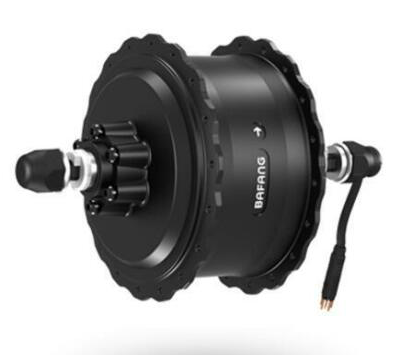
The 750W Speed Limit Reality
Here's the deal: Any stock e-bike in the U.S. is legally capped at 750 watts and 20mph on throttle alone (28mph with pedal assist).
This isn't just some suggestion - it's federal law. The government classifies anything under 750W as a "low-speed electric bicycle" under Public Law 107-319. Stay under these limits and you're riding a bicycle. Go over, and legally speaking, you're riding a motorcycle. See Public Law 107-319; 15 U.S.C. § 2085.
This law, enacted in 2002, established that electric bicycles are regulated as consumer products under the Consumer Product Safety Act and subject to the bicycle safety standards that apply to ordinary bicycles. See 16 C.F.R. Part 1512. The Consumer Product Safety Commission enforces this law. As a practical matter, Public Law 107-319 ensures that electric bicycles are designed, manufactured, and tested like traditional bicycles for the purposes of consumer product safety law. If an electric bike stays within these limits, it is not classified as a “motor vehicle” for the purposes of federal law, and is not subject to National Highway Traffic Safety Administration vehicle standards.
The 3-Class System Breakdown
Most states use this classification system:
Class 1: Pedal-assist only, cuts out at 20mph
Class 2: Throttle allowed, maxes at 20mph
Class 3: Pedal-assist only, cuts out at 28mph, requires speedometer
All three classes are limited to 750W motors. You'll see those little stickers on most American e-bikes showing which class they belong to.

For all classes, the maximum power output is 750 watts (as a general rule, 750 watts is equivalent to 1 h.p.), and manufacturers and distributors of electric bicycles would be required to apply a class identification label to each electric bicycle.
Most American bike manufacturers voluntarily complied with the BPSA 3-class system and put prominent stickers on their e-bikes showing what class it belonged to. Super73’s S-1 and Z-1 bikes displayed the sticker in accordance with California law. The Michael Blast Outsider, imported from an Australia-based company, does not display the sticker, although with a 500w or 750w motor, it is legally an e-bike in the U.S.
The Wild West: "Out of Class" Monsters
Here's where it gets interesting. In 2020, Super73 released an its S-2 and R Series feature a 2,000 watt motor that can reach speeds above 28 mph. Super 73 called them products “electric motorbikes.” To quote: “The Super73-S2 is a high performance street-legal electric motorbike that does not require a license or registration.”
That was a bit of marketing BS. Under federal law, there's no such thing as a "street-legal electric motorbike" that doesn't require registration and licensing. You either have a sub-750W bicycle or you have a motorcycle that needs to be registered with the DMV.
What About Those Insane Custom Builds?
Companies like ONYX advertised 5,400W motors hitting 60mph. But their fine print indicated they shipped them limited to 750W/20mph for legal compliance. Want to unlock that power? You're on your own, legally speaking.
There is no such thing as a “street-legal electric motorbike” that does not require a license. Under federal law, a commercially-manufactured electric bike can either be a 750-watt electric bike regulated like a bicycle, or something with more that 750watts and that is a motor vehicle, subject to NTSF and ADOT and requiring a license. When an electric bike does not fit within the 3-class system, BPSA refers to such vehicles as “Out of Class Electric Vehicles.” They warn that such vehicles increase the likelihood of conflict between ebike users and everyone else on the road (cars, bikes, pedestrians) and worry that this may result in a backlash and undo progress they have made.
The Real Talk: Custom Motor Kits
This is where our 3000-5000W motor kits come in. These aren't legal street machines - they're for private property, off-road, and those who understand the risks and legal implications.
With our 5000W kit and 72V battery setup, riders report 59+ mph speeds. That's motorcycle territory, which means:
- You're technically riding a motorcycle
- You could get registration, insurance, and licensing
- You're assuming all legal and safety risks
Because sometimes you want to build something absolutely insane for private property, track days, or off-road adventures. Our kits aren't "plug and play" - they're for builders who want to create something that'll make your friends question your sanity (in the best way).
Bottom Line
The rules are the rules, but they're still evolving. The e-bike world is moving faster than regulations can keep up. Whether you stay legal or go full outlaw is your choice - just be smart about it.
Next up in Part 2: We'll dive into the pros and cons of building a beast that pushes the limits. Let’s talk about the pros and cons of bending or breaking the rules by building a fast ebike yourself.
RESOURCES
https://peopleforbikes.org/our-work/e-bikes/policies-and-laws/
https://en.wikipedia.org/wiki/Electric_bicycle_laws#Federal_laws_and_regulations_on_sales